




Description
Premium Coconut Husk Substrate by Freedom Breeder
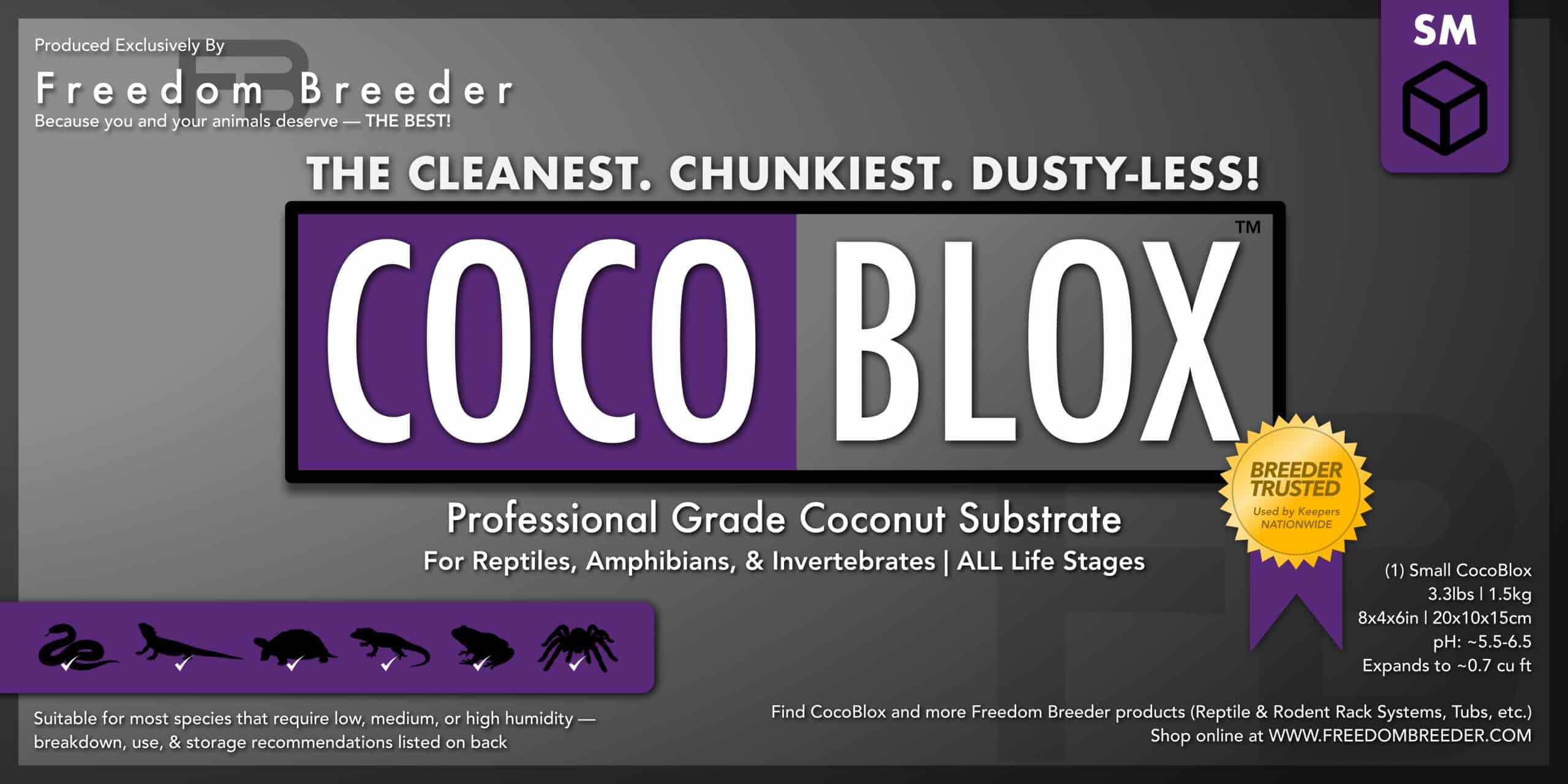
CocoBlox is a premium, triple-washed coconut husk substrate produced exclusively by Freedom Breeder. Each batch is carefully processed to remove dust and particulates, creating a clean, low-mess substrate ideal for reptiles, amphibians, and invertebrates.
Made from 100% organic and sustainable coconut husk, CocoBlox offers excellent moisture retention, simple maintenance, and naturally anti-microbial and anti-bacterial properties—making it one of the most trusted substrate choices among keepers.
CocoBlox can be used dry for low-humidity species or misted for mid- to high-humidity species.
Why CocoBlox Is Different
• Extra “chunky” pieces
CocoBlox is manufactured using larger husk chunks to reduce (and often eliminate) the risk of accidental ingestion by hatchlings—one of the main causes of impaction in smaller reptiles.
• Superior moisture retention
Thanks to fresher raw materials and chunkier pieces, CocoBlox holds humidity longer than most coconut substrates on the market. Under proper conditions, it can easily maintain 60%+ humidity and sustain 80%+ humidity when required.
• Easy to break down—no soaking required
Blocks are press-packed for efficient shipping and storage, but they break apart easily without adding water.
• Low sodium, optimal pH
CocoBlox maintains a pH of 5.5–6.5, helping slow or prevent mold growth.
Breakdown & Use Instructions
Before Use
We recommend freezing new substrate overnight to eliminate any pests or eggs that could have been introduced during shipping or storage.
Tip:
Punch a few holes in the packaging while thawing to allow trapped moisture to escape. This reduces the chance of mycelium forming.
Always let blocks reach room temperature before introducing animals (you may still break down or mist the block before it warms fully).
Step-by-Step Setup
Step 1 — Break Down the Block (Dry)
-
Break apart the block by hand into a storage bin.
-
Do NOT soak or submerge CocoBlox.
-
Oversaturation increases the risk of mycelium or mold.
-
Inspect for any foreign debris or string that may have been pressed into the block during packing.
Step 2 — Add the Substrate
-
Place a single, even layer into your tub, enclosure, or terrarium.
-
Add more for burrowing species if desired.
-
Note: CocoBlox will expand once moisture is added.
Step 3 — Mist
-
Spray with untreated tap water (or conditioned well water).
-
Start with less water than you would with other coconut substrates—CocoBlox retains moisture extremely well.
For low-humidity species, we recommend lightly misting initially to allow the substrate to expand, then letting it dry completely before introducing animals.
Step 4 — Allow Expansion
Let CocoBlox sit for a few minutes to absorb moisture and expand.
Step 5 — Mix & Adjust
Mix the substrate thoroughly, mist again, and repeat until your desired humidity level is reached.
Step 6 — Store Leftovers Properly
Let any unused CocoBlox dry completely before storage (see storage section below).
Maintenance Guidelines
-
Spot clean regularly to prevent mold and maintain hygiene.
-
Replace soiled areas with fresh substrate and mix into the existing layer.
-
When humidity drops below species requirements, mix and mist to rehydrate evenly.
-
A full substrate replacement is recommended when:
-
It no longer holds moisture or dries out too quickly
-
It turns dark brown and does not brighten to red-orange when moistened
-
Important Information: Mold & Mycelium
Coconut Mold
-
Color: Black
-
Cause: Extreme oversaturation and insufficient airflow
-
Action: Remove and discard affected pieces immediately
-
Note: All substrates can mold under improper conditions.
Mycelium
-
Color: White, spider web-like
-
Cause: High moisture, poor ventilation, or substrate not fully dry before use
-
Not harmful to reptiles or humans
-
More common during rainy seasons due to ambient humidity
If Mycelium Appears — Don’t Panic
You do not need to discard the substrate.
Step 1:
Lightly spray the affected area with tap water. Chlorine traces will help eliminate it.
Step 2:
Increase airflow (ceiling fan, room fan, etc.).
Mycelium typically disappears within 2–6 hours.
Note:
CocoBlox excellent moisture retention can highlight airflow or husbandry shortcomings that may not be obvious with lesser substrates—making it a useful indicator of enclosure/husbandry conditions.
Storage Recommendations
-
Allow unused CocoBlox to dry completely before storing.
-
Store in a well-ventilated tub or bin.
-
Adding ventilation holes to Sterilite bins or black/yellow Costco-style totes works well.
-
Keep broken-down or unopened blocks in a cool, dry place with airflow until use.

